




Buying guide
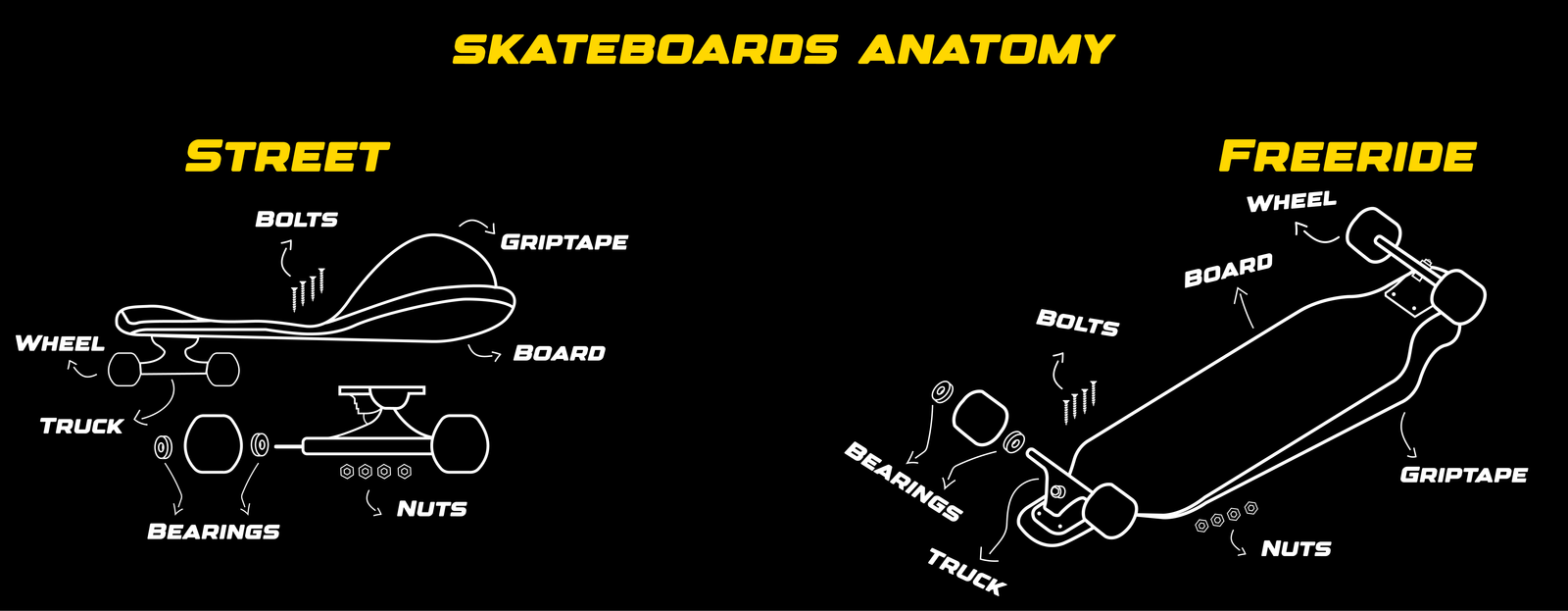
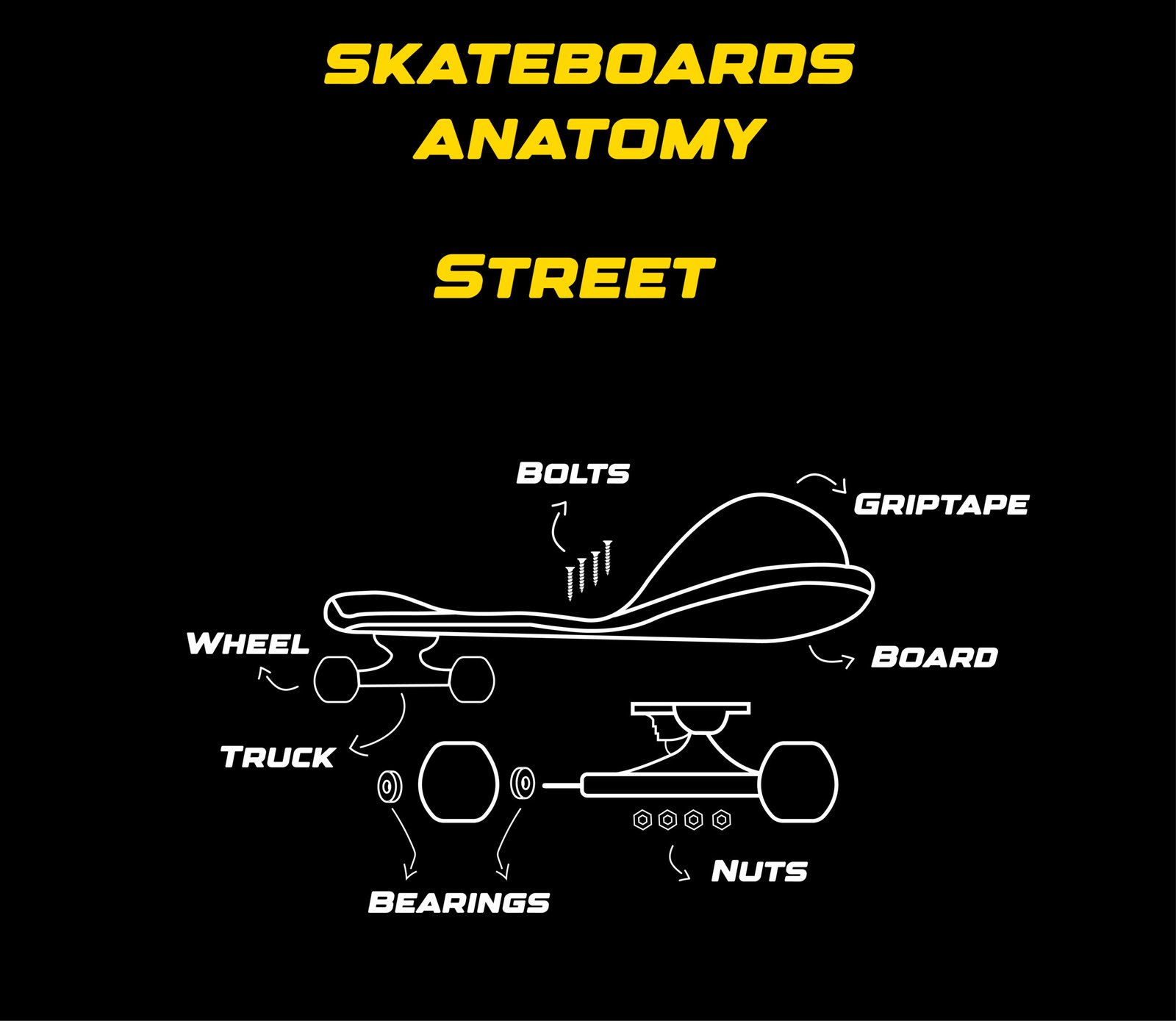
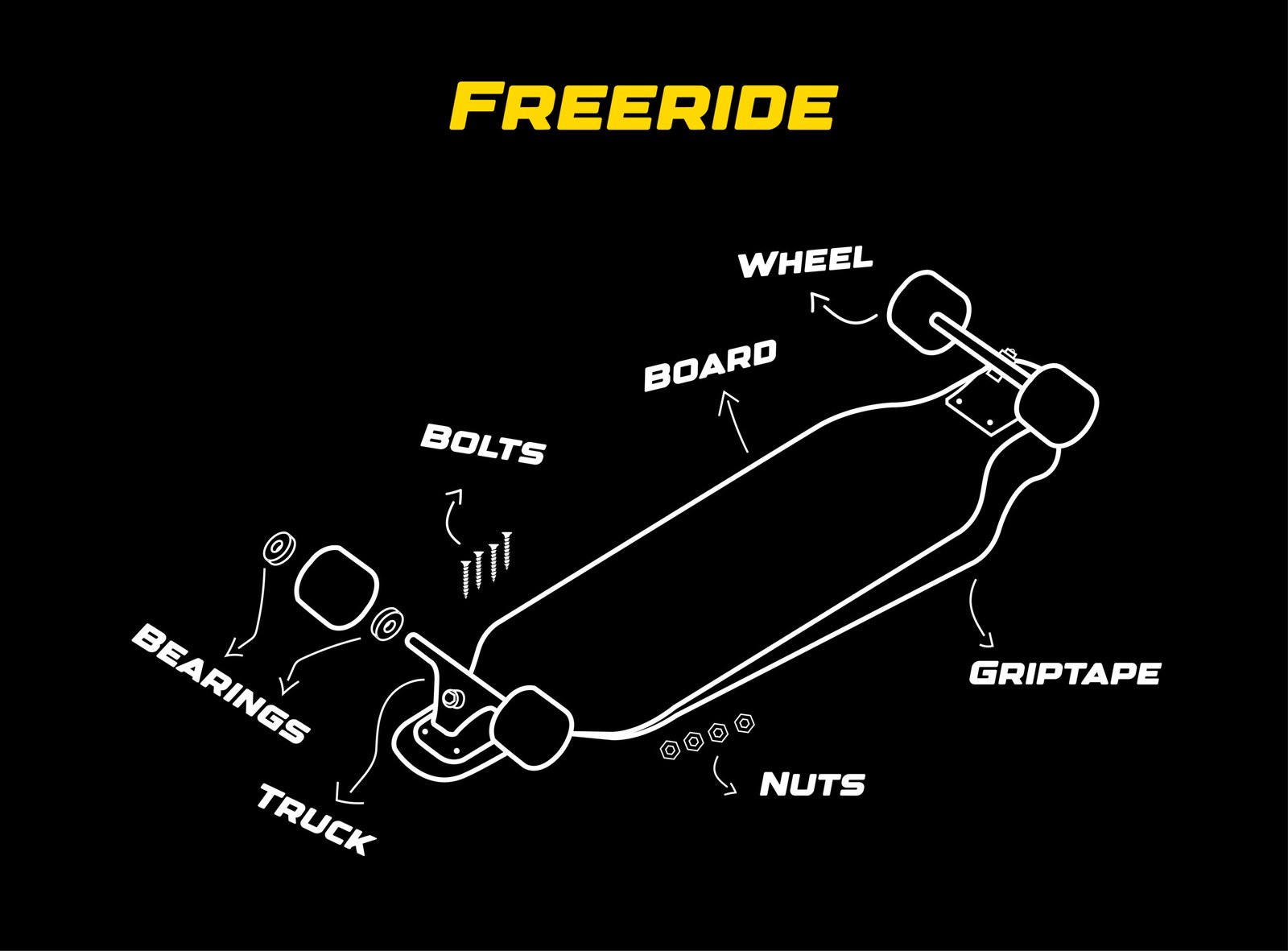
- Complete street skate | board
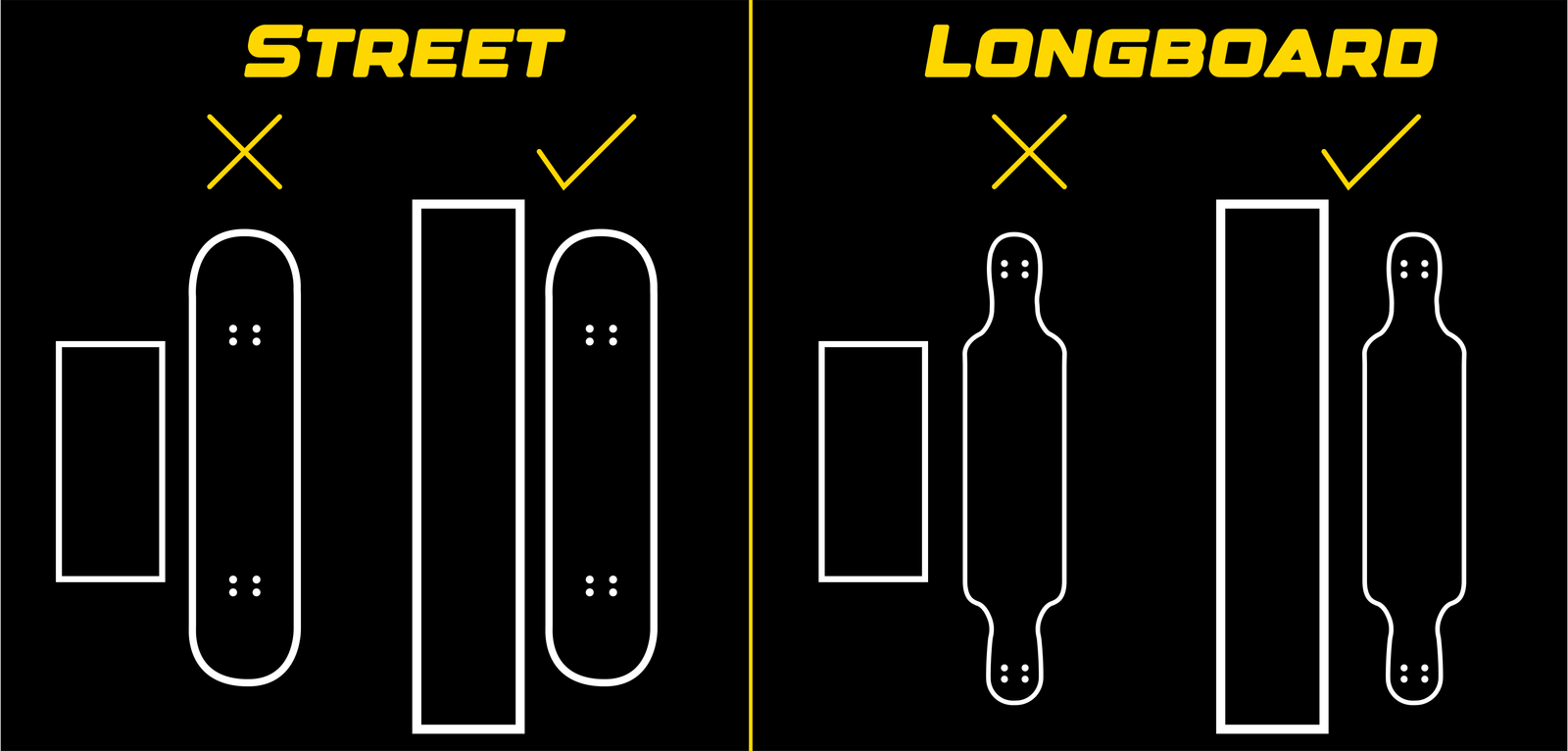
When choosing a street skate size or a board for it, always consider the size of your footwear. You can use the following drawing and table for reference:
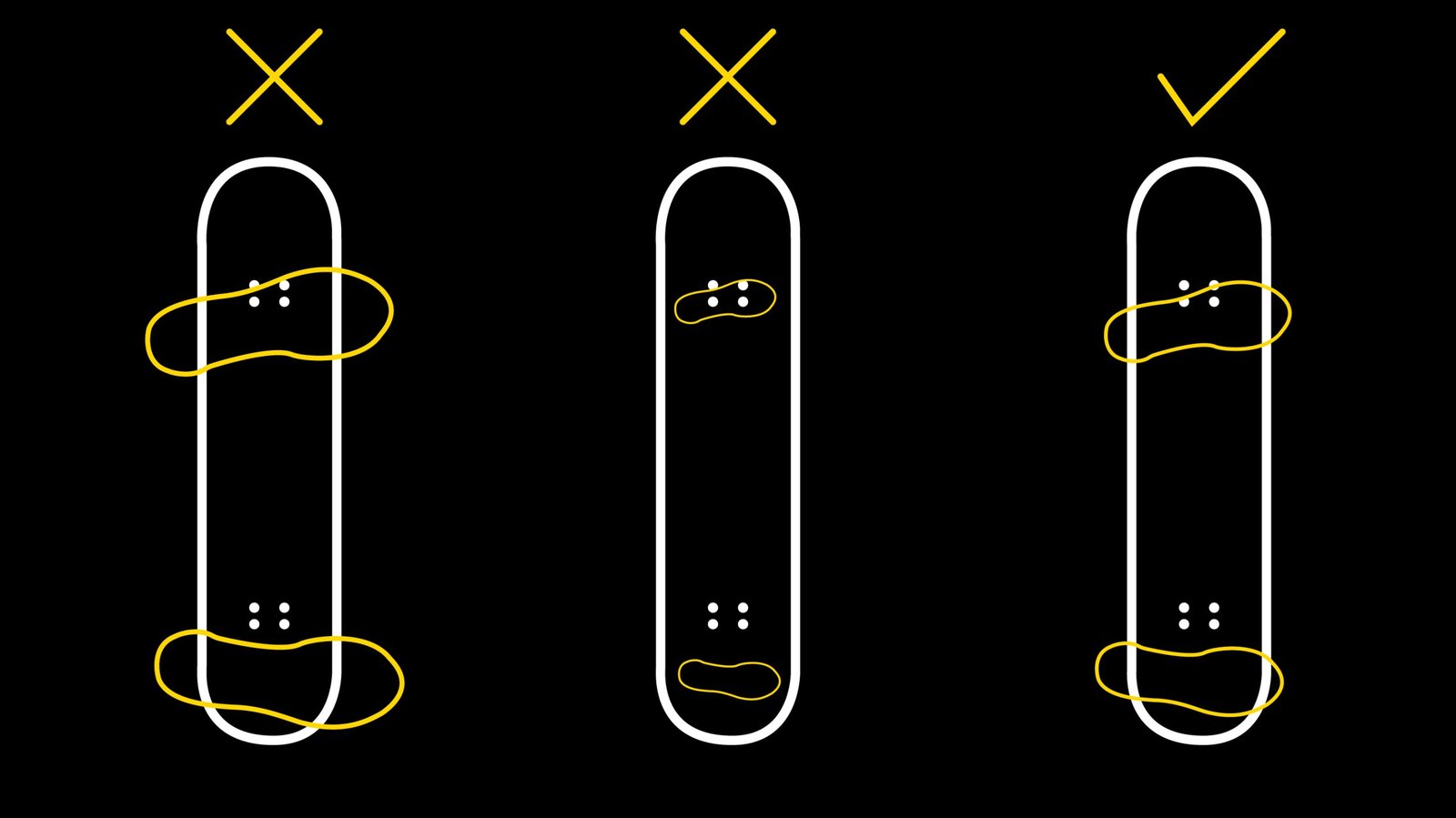
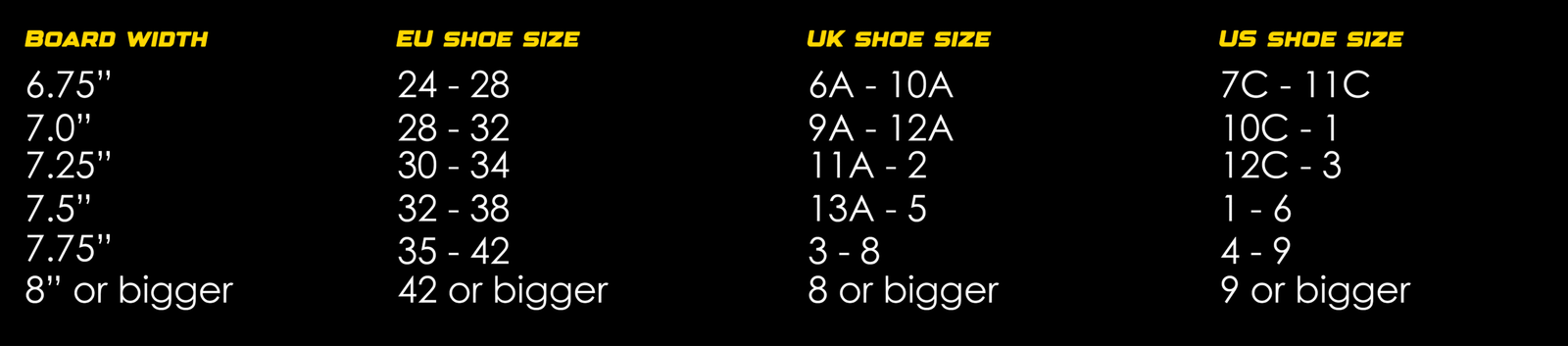
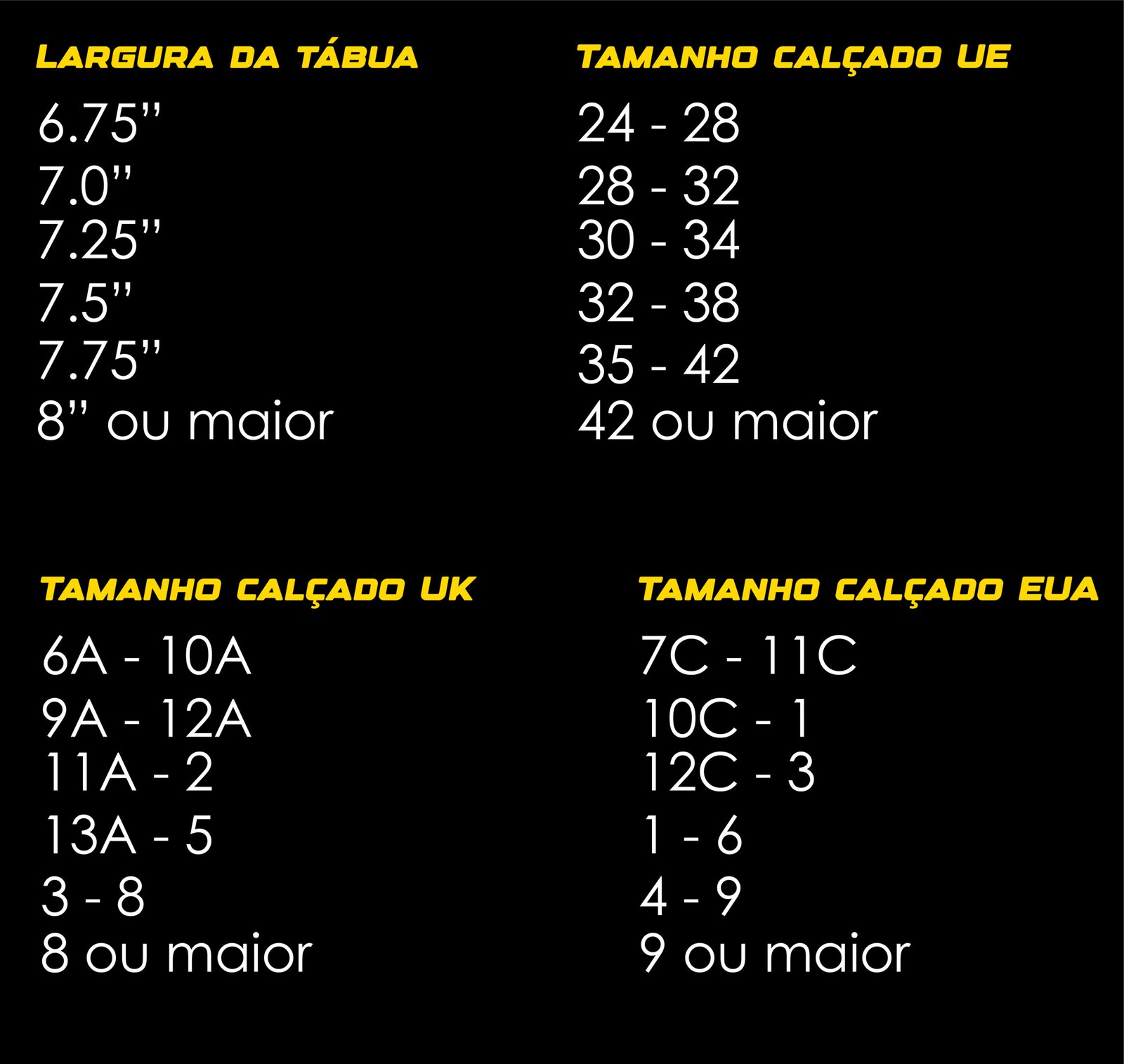
The standard measurement for skateboards is the inch, so use the converter below together with the table for better accuracy in your choice.
Select ” inches ” and ” centimeters “
- Complete freeride longboard skate | board
The ideal longboard size naturally depends on your riding style:
9.0″ x 38″ → Agile, ideal for technical slides and lighter or shorter skaters
9.25″ x 39″ → Balance between agility and stability
9.5″ x 40″ → Very versatile, great for beginners and intermediates
9.75″ x 41″ → More stability on downhill and slides at higher speeds
10.0″ x 42″ → Maximum comfort and space for feet, ideal for larger skaters
In our store, we present the freeride:
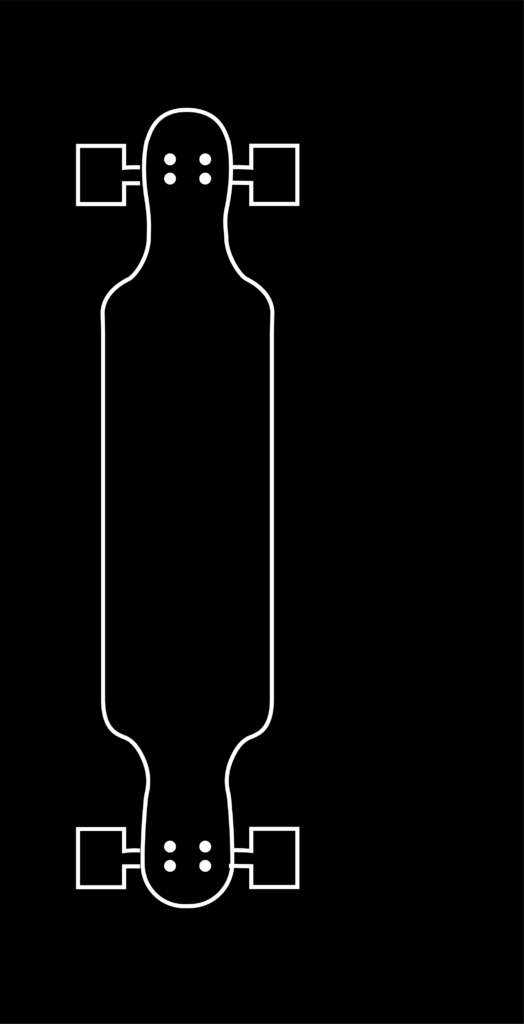
Freeride longboarding is all about creativity and pushing the limits of what is possible with a longboard.
It's a great choice if you're interested in doing tricks.
- Griptapes
To buy a griptape, have as refrence the size of your board, because the griptape has to be bigger.
- Trucks for street skate
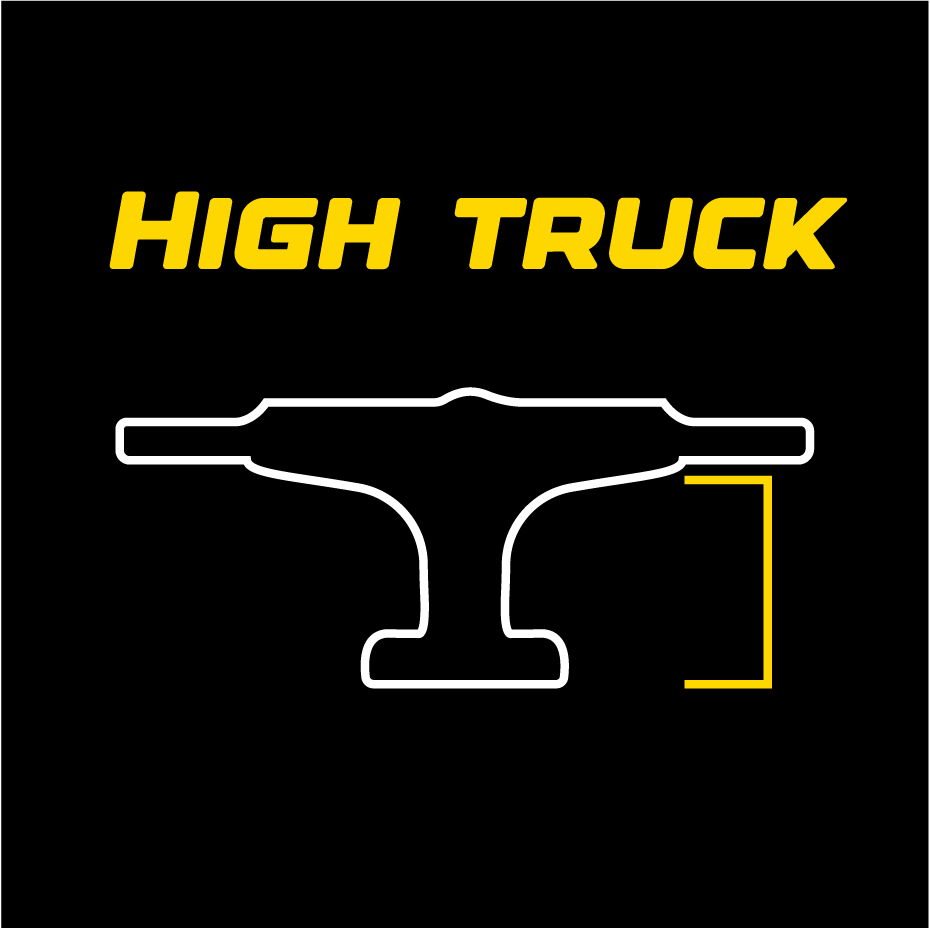
Ideal for using large wheels (from 55mm) and for moving around the city or simply using them on ramps.
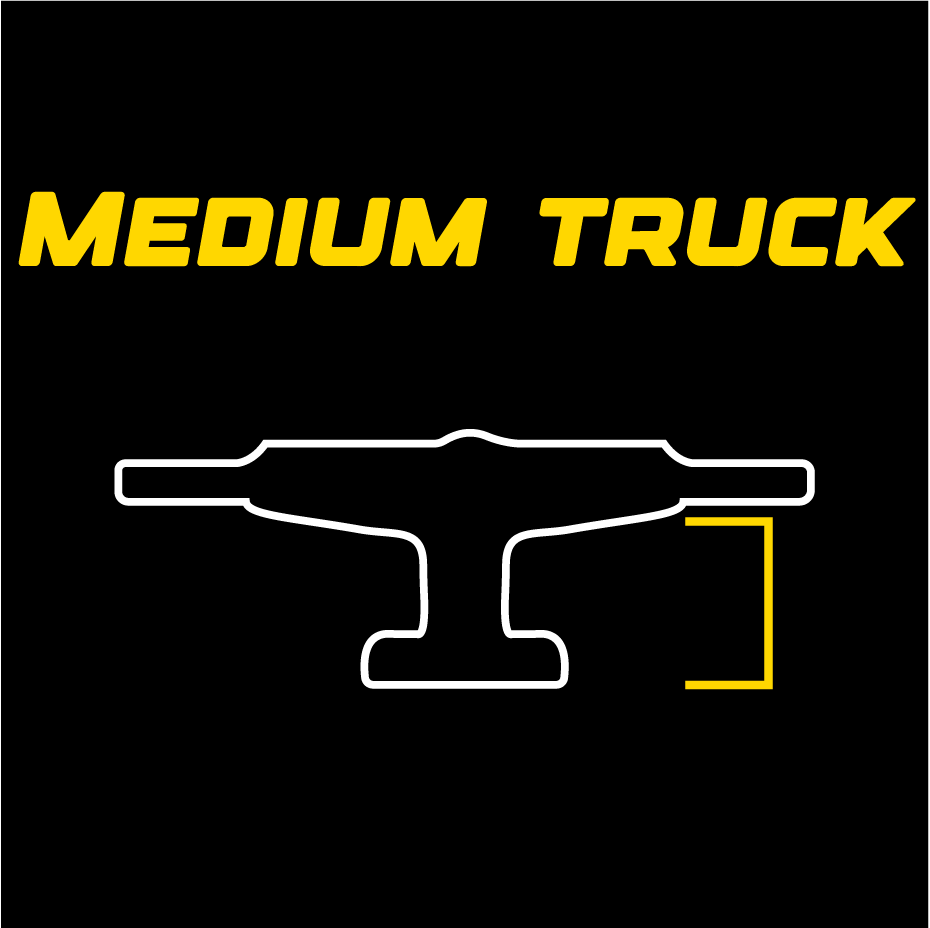
They are a little bit of everything. They work well if you are going to use them in different environments such as the street, skatepark or simply to move around. Allows you to take medium-sized wheels (52-56 mm).
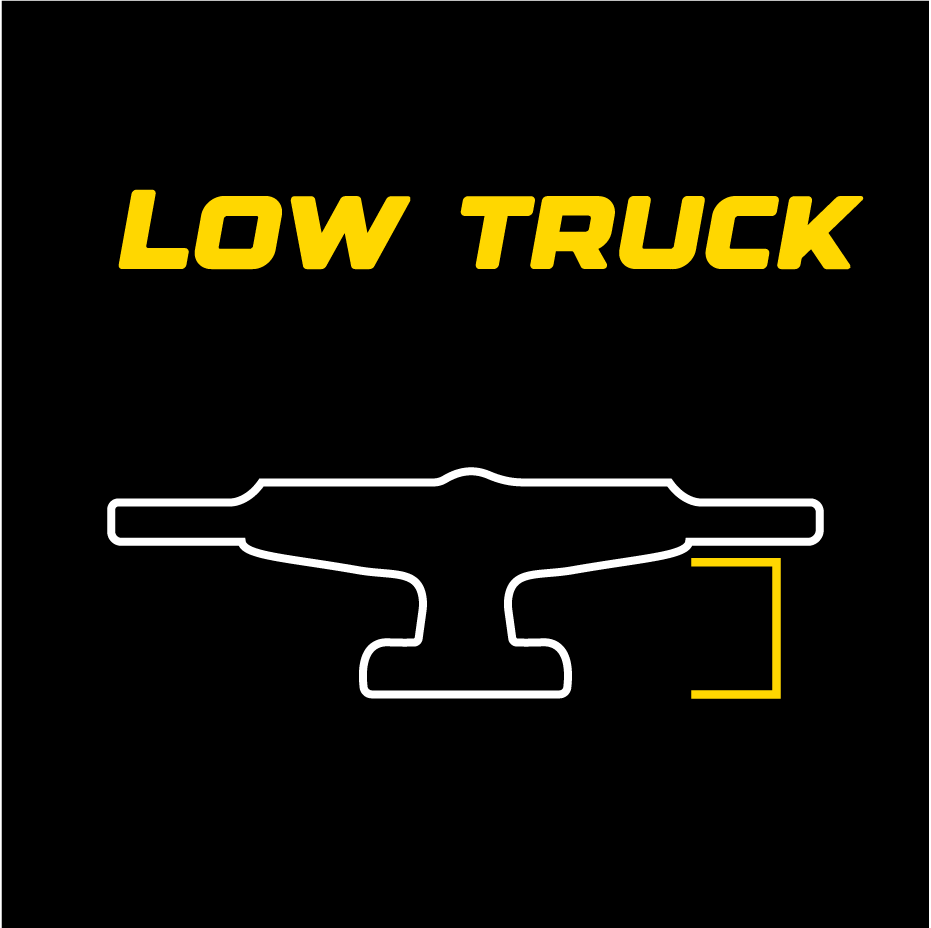
These trucks make the skateboard's center of gravity lower and easier to maneuver when doing tricks. They use medium-small size wheels (50-56 mm).
Baseplate
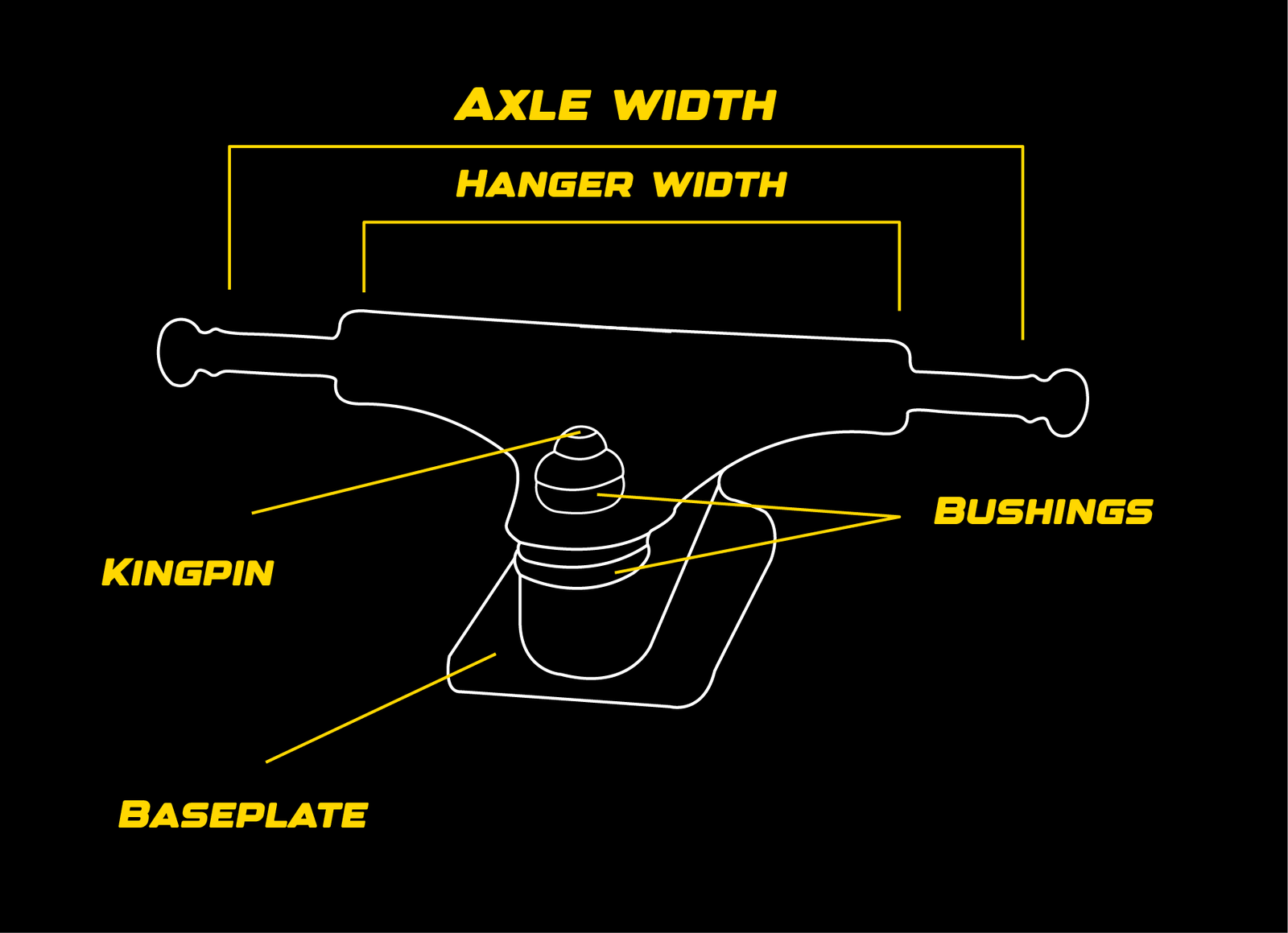
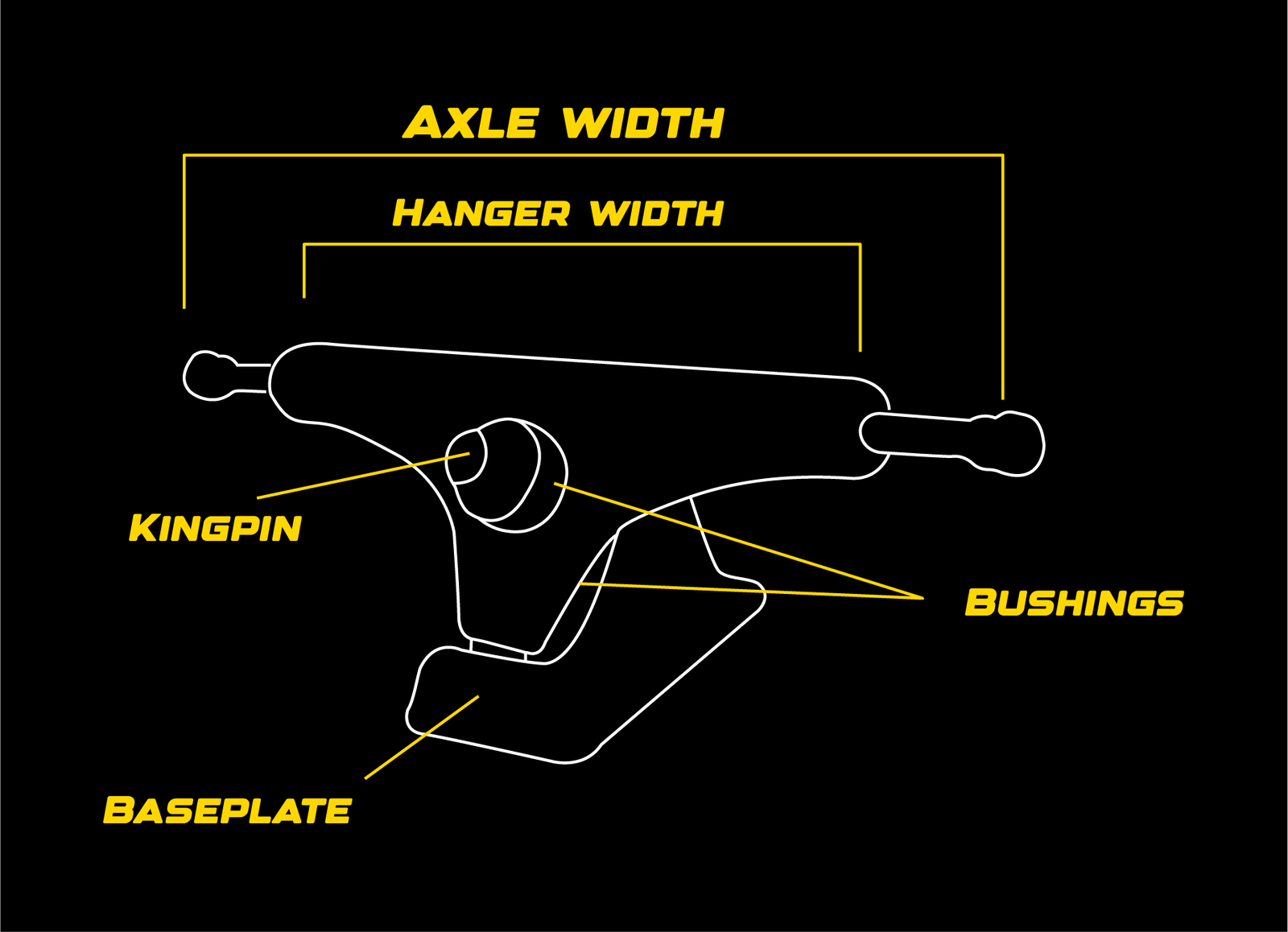
One of the functions of the baseplate is to distribute the skater's weight evenly across the truck to provide stability while also distributing the impact of landings on the board. The baseplate is essential to the truck and its overall setup.
Hanger
The hanger is the largest component of a skateboard truck. It is a metal bar that takes on a triangular shape and therefore plays a vital role in your skateboarding tricks.
Ideal hanger width
- 6.75″ board → 101 mm (3.98″)
- 7.0″ board → 120 mm (4.72″)
- 7.25″ board → 127 mm (5.0″)
- 7.5″ board → 129–133 mm (5.08″ – 5.24″)
- 7.75″ board → 133 mm (5.24″)
- 8.0″ board → 139 mm (5.47″)
Axle
The axle extends through the inside of the hanger and has threads on both ends, where the nuts are attached to hold the wheels in place. Over time, the outer threads can wear out, but they can be rethreaded with the right tools. The most important thing is that the width of the axle is as close as possible to the width of your board – this ensures balance, maneuverability and aesthetics.
Ideal axle width
- 6.75″ board → 165mm – 171mm (6.5″ – 6.75″)
- 7.0″ board → 175mm – 180mm (6.9″ – 7.1″)
- 7.25″ board → 180mm – 185mm (7.1″ – 7.3″)
- 7.5″ board → 187mm – 193mm (7.4″ – 7.6″)
- 7.75″ board → 193mm – 200mm (7.6″ – 7.9″)
- 8.0″ board → 200mm – 205mm (7.9″ – 8.1″)
Kingpin
The kingpin is a large bolt that runs through the center of the truck and holds all the different parts of the truck together. With the kingpin nut, you can adjust the tightness of your trucks. Kingpins can break due to the forces they endure, but they can be replaced.
Bushings
Bushings influence the truck's sensitivity and return:
- Conical (cone) → Greater response and ease of turning.
- Barrel → Greater stability and control.
- Hard (88A-97A) → More stability
- Medium (78A-87A) → Best for those who want more maneuverability.
In street skate:
The most common shapes are cone and barrel.
Hardness: 90A – 100A (hard).
Personal preference is very important here. Skaters who like a looser truck will use softer bushings or swap the lower cone for a barrel.
Weight
In street skate:
Lightness and agility are the priority. Average weight:
300 to 400 grams per truck
600 to 800 grams per pair
- Trucks for longboard skate
1. Type of Truck
For freeride, the reverse kingpin (RKP) are the most recommended. They offer more stability and response at high speeds, as well as making skidding easier.
They can be of two types:
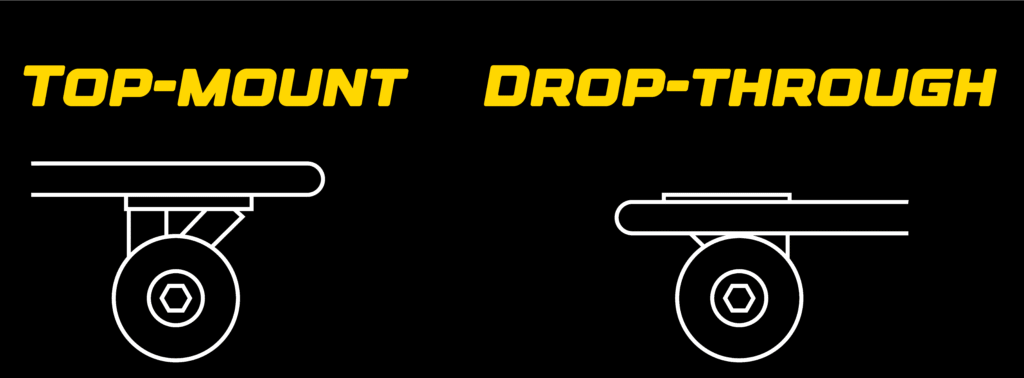
The longboards top-mount are attached directly to the bottom of the board. This gives the skater more turning ability for tighter, more aggressive turns. Because top-mount boards are higher off the ground, speed wobbles can become an issue. Skaters can add more stability by using different bushings, trucks, and wheels.
The longboards drop-through have the trucks mounted through the board, resulting in a lower height and a lower center of gravity. This design increases stability and makes it easier to push and slide.
- 165 mm → Can be used for smaller boards, providing more control when cornering.
Hanger
The hanger is the largest component of a skateboard truck. It is a metal bar that takes on a triangular shape and therefore plays a vital role in your skateboarding tricks.
Ideal hanger width
- 9.0″ board → 180 mm (7.09″)
- 9.25″ board → 180 mm (7.09″)
- 9.5″ board → 185–190 mm (7.28″ – 7.48″)
- 9.75″ board → 190 mm (7.48″)
- 10.0″ board → 190–200 mm (7.48″ – 7.87″)
Axle
The axle extends through the inside of the hanger and has threads on both ends, where the nuts are attached to hold the wheels in place. Over time, the outer threads can wear out, but they can be rethreaded with the right tools. The most important thing is that the width of the axle is as close as possible to the width of your board – this ensures balance, maneuverability and aesthetics.
Ideal axle width
- 9.0″ board → 222mm – 228mm (8.75″ – 9.0″)
- 9.25″ board → 228mm – 234mm (9.0″ – 9.25″)
- 9.5″ board → 234mm – 241mm (9.25″ – 9.5″)
- 9.75″ board → 241mm – 247mm (9.5″ – 9.75″)
- 10.0″ board → 247mm – 254mm (9.75″ – 10.0″)
3. Baseplate degree
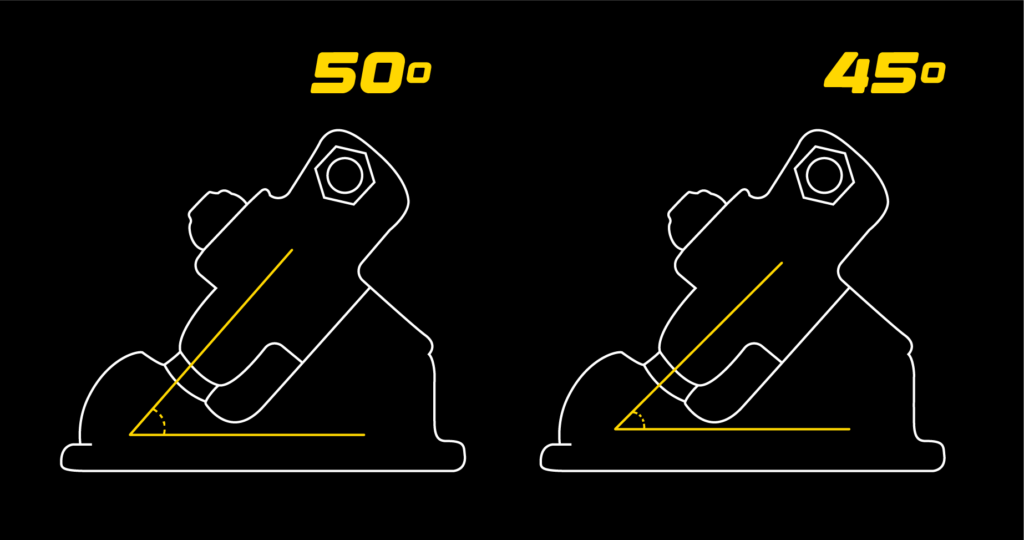
The angle of the baseplate affects the response of the truck:
- 50° → More responsive and makes cornering easier.
- 45° or less → More stable at higher speeds, favors more aggressive slides.
4. Bushings
Bushings influence the truck's sensitivity and return:
- Conical (cone) → Greater response and ease of turning.
- Barrel → Greater stability and control.
- Hard (88A-97A) → More stability
- Medium (78A-87A) → Best for those who want more maneuverability.
In freeride skate:
The most common shape is the barrel.
Many freeriders prefer softer bushings in the front and harder bushings in the rear (to make it easier to start the slide but maintain stability).
6. Materials
- Forged aluminum → More durable and resistant.
- Cast aluminum → Cheaper, but less resistant.
Weight
No skate longboard:
Stability and strength are the priority. Average weight:
450 to 600 grams per truck
900 g to 1,2 kg per pair
- Street skate wheels
Diameter
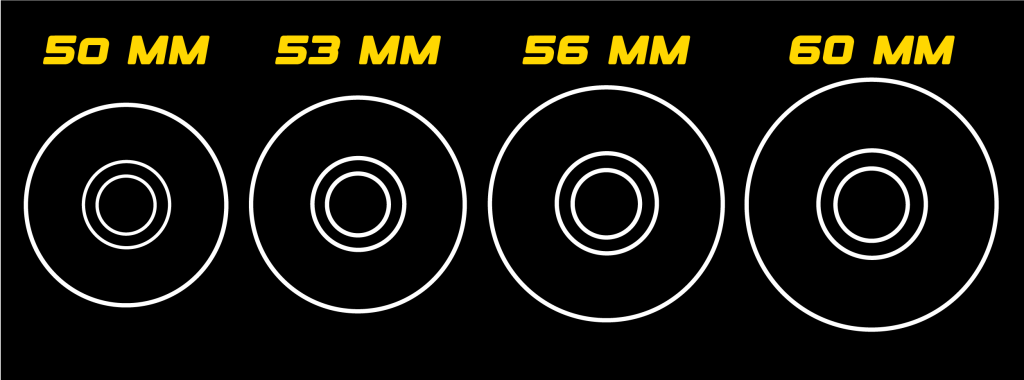
Smaller wheels:
Bigger wheels:
- Agile, maneuverable and excellent for tricks. Although they may not reach the same speeds as larger wheels, they are more reactive;
- Less tolerant and more prone to sudden stops if a small pebble crosses your path;
- Lower pop angle, meaning less effort is required to do flip tricks and popping ollies;
- Higher speeds with slower acceleration and less agility;
- More tolerant when hitting small pebbles or other surface irregularities;
- Taller trucks may be needed to avoid wheel bites.
Wheel hardness
To measure the degree of hardness, we use the “durometer” which, for skateboard wheels, uses the “A” scale mostly.
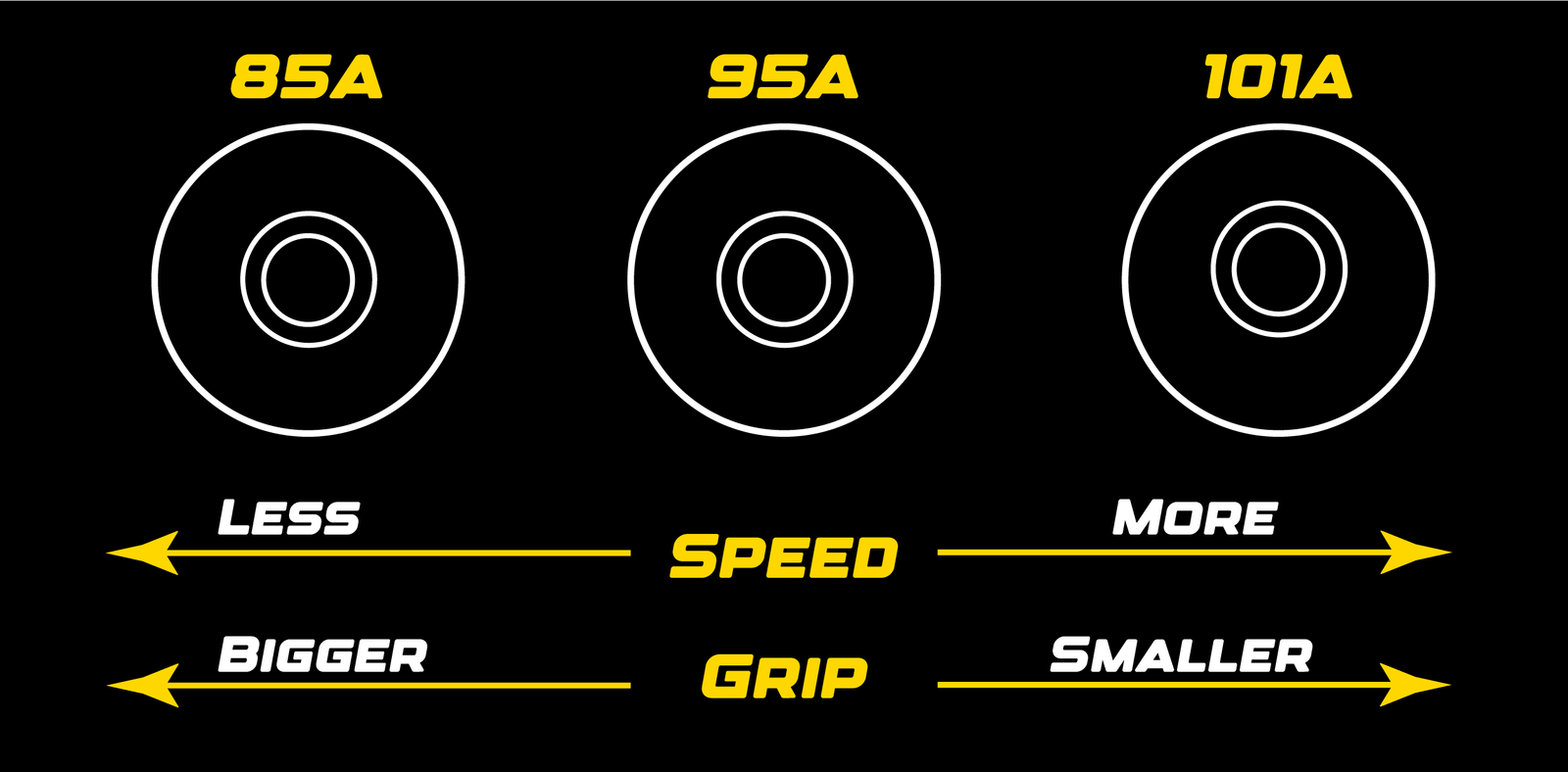
For this reason, on each wheel you can see the number and then the letter “A”, the higher the number, the harder the wheel.
Harder wheels:
Softer Wheels:
- Greater speed and durability;
- Less grip and shock absorption;
- Shaking and noisy on uneven surfaces;
- Responsive and fast on smooth surfaces;
- Great for tricks on streets or skateparks.
- More grip at the expense of speed and longevity;
- Absorb vibrations and roughness from uneven surfaces;
- Ideal for filming as it minimizes shake and noise;
- Great for walking everywhere.
Running Surface
Running surface is the most important factor to consider when it comes to skateboard wheel shapes. “Running surface” refers to the part of the wheel that touches the ground when you’re skating.
Wide running surface
Small running surface
- More adherent and more stable
- Does not slide as easily
- Less reactive
- Wider wheels weigh more
- More reactive
- Less friction
- Greater tendency to slide
- Vibrations from rough surfaces are more pronounced
- Thin skateboard wheels weigh less
Street wheels:
Wide running surface
Small running surface
- Wheel diameter: 56–60 mm
- Running surface: ~24–28 mm
- Wheel diameter: 50–53 mm
- Running surface: ~19–22 mm
- Longboard skate wheels
In freeride, the focus is on controlling slides, drifts and technical maneuvers, so the wheels need to have a balance between grip and ease of sliding.
Diameter
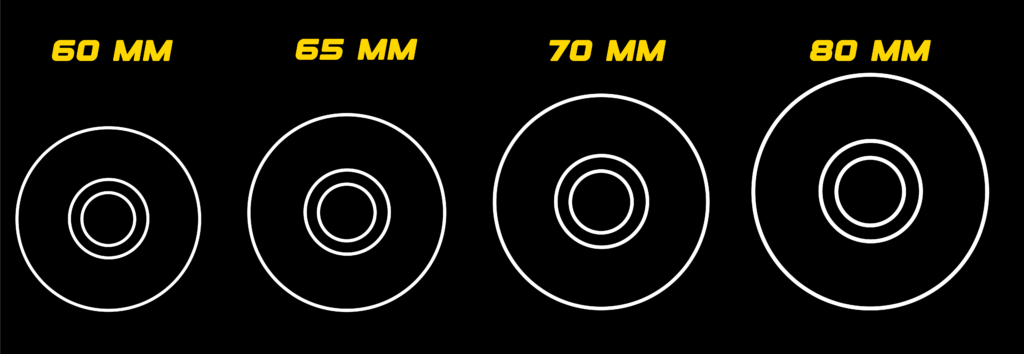
- 60-65mm → Smaller wheels accelerate quickly and initiate slides more easily.
- 70mm → This is the most common size, as it balances speed and control.
- 80mm → Accelerates more slowly, but can reach a higher top speed and easily withstand rough terrain
Durometer (Hardness)
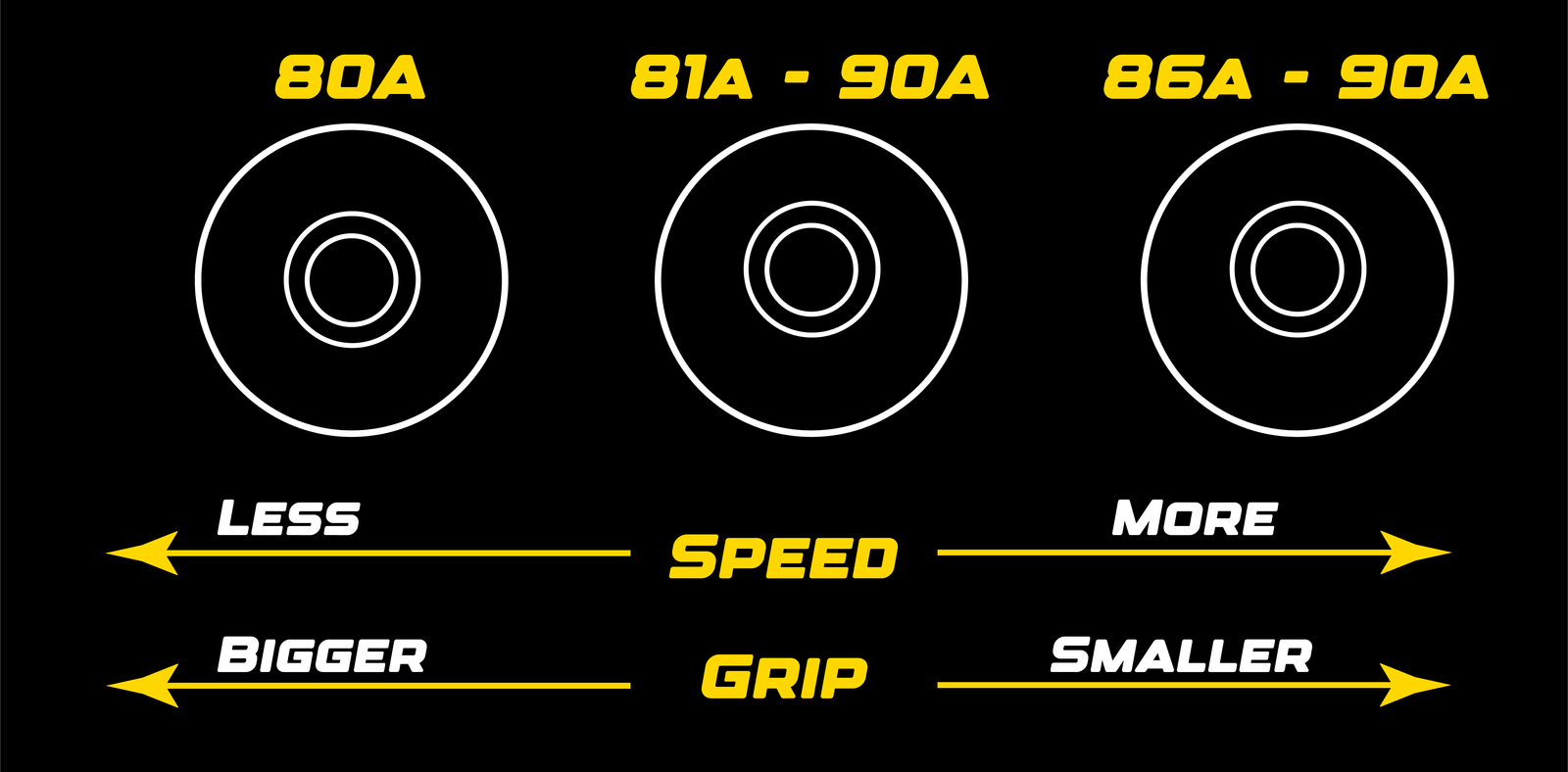
- 80A Softer Wheels → They grip the asphalt more, requiring more effort to slide.
- 81A – 90A → Intermediate to hard wheels, make slides easier without completely losing control.
- 86A-90A Harder Wheels → glide with less resistance, ideal for those who already have experience in freeriding.
Running surface:
Running surface is the most important factor to consider when it comes to skateboard wheel shapes. “Running surface” refers to the part of the wheel that touches the ground when you’re skating.
Wide running surface
Small running surface
- More adherent and more stable
- Does not slide as easily
- Less reactive
- Wider wheels weigh more
- More reactive
- Less friction
- Greater tendency to slide
- Vibrations from rough surfaces are more pronounced
- Thin skateboard wheels weigh less
Wide running surface
Small running surface
- Wheel diameter: 70–80 mm
- Running surface: ~38–50 mm
- Wheel diameter: 60-65 mm
- Running surface: ~22-33 mm
- Bearings
A wheel needs two bearings to rotate.
Regardless of the type of bearings you have, avoid placing them in contact with the the water, the sand, and humidity as this will considerably reduce the useful life of your bearings. Regular cleaning and lubrication can help increase their durability and speed.
The quality of the bearings depends on several factors, such as:
Material
The material from which bearings are made of is one of the most important factors for their quality and durability. The best bearings are made of true steel, such as those made of chrome, titanium or Swiss steel.
The bearings made of ceramics (silicon nitride) are generally used for speed skating and rarely rust, being more durable than steel ones.
Precision/ABEC
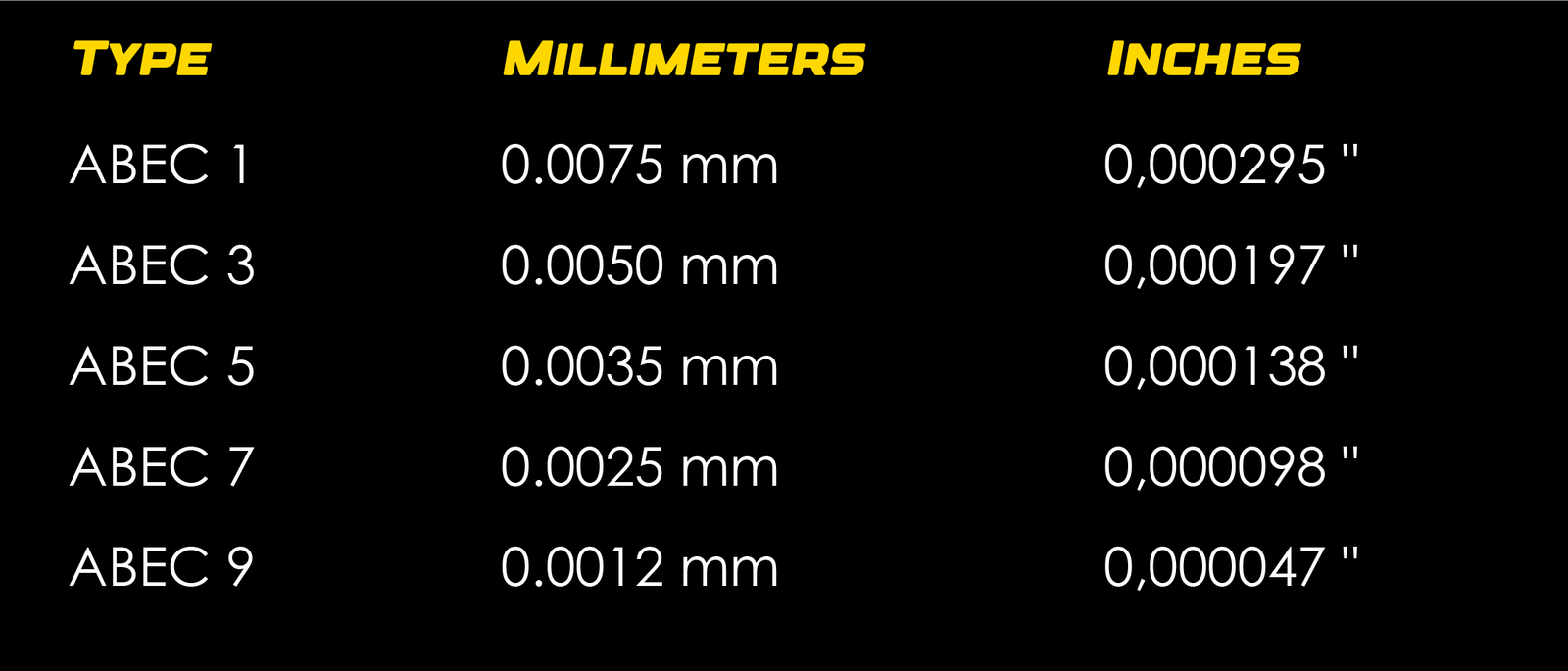
Bearings are classified according to the ABEC specification (Annular Bearing Engineering Committee). It describes the ability of bearings to withstand the pressure administered to them during use. Higher ABEC provide better precision, efficiency and greater capacity for speed, but DO NOT necessarily make the components spin faster.
It is important to know that all bearings lose their level of precision after wear and not all brands use the ABEC scale (for example, Bones) and that there are other scales for bearings.
Lubrication
Bearings may use oil or grease as lubrication. A bearing never must be left without lubrication. If this happens, it could melt and lose speed.
- Oil: Results in high speed due to lower resistance in the lubricating material. A thin oil provides higher speed, but also requires more frequent maintenance.
- Grease : Resists water and dirt more than common oil. It requires almost no maintenance, but creates greater resistance, which also means less speed.
Warning
Water can remove all lubrication! If this happens and the water dries out, your bearings will become very hot and possibly melt and make sounds the next time you use them. This means you need to replace the bearings. In some cases, they can be saved by cleaning and lubricating them properly before the next use.
Shields/Seal
To prevent dirt, sand and water from entering bearings, a shield or seal is often placed on each or one side of the bearing.
- A shield is usually metal, mounted on the outer ring, and has a small gap on the inner ring (also called dust-proof bearing). Bearings with shields have little friction and therefore rotate easily, providing more speed. On the other hand, the bearing is not perfectly protected against water and dirt.
- A seal is made of steel-reinforced rubber, and is mounted on the outer ring, where it lightly touches the inner ring. It offers better protection and almost no maintenance, but also greater friction and slightly lower speed.
What type of bearing is best for you?
- If you're riding outside, sealed and lubricated bearings with grease are more suitable, as they are more resistant to dirt and dust and require little or no maintenance.
- If you are riding indoors, you can use open bearings, as they spin quickly and are easy to clean.
- If you want speed and long distances, you can use high-precision oil-lubricated bearings. They spin extremely fast and are easy to clean, but dirt can damage them quickly.
Recommendations
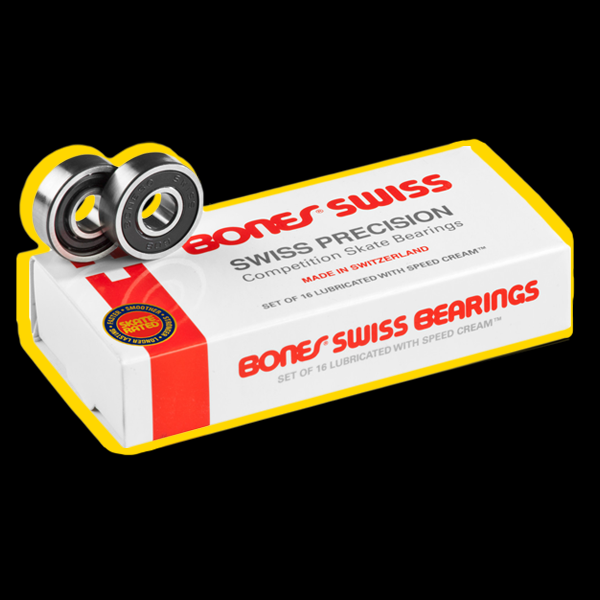
Best bearings overall: BONES SWISS
MATERIAL: Metal
FOR: Street/ Longboard
Bones Swiss bearings are designed to be fast and durable. They come pre-lubricated with Speed Cream Racing Lubricant and, according to many skaters, Bones Swiss bearings can last for years if properly maintained.
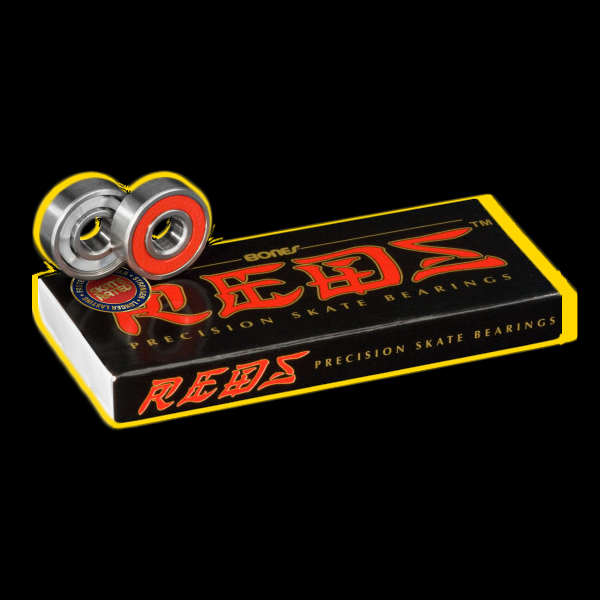
Best quality-price bearings: Bones Reds
MATERIAL: Metal
FOR: Street/ Longboard
Bones Reds skateboard bearings are the best-selling bearings from the Bones brand. They are a favorite among skaters for their high performance compared to their low cost.
Instead of being made in Switzerland like Bones Swiss bearings, these bearings are made in China and are therefore a little cheaper. Even so, Bones Reds is inspected twice to ensure high quality for the customer. They come pre-lubricated with Speed Cream Racing Lubricant and have a removable outer shield to make cleaning the bearings easier.
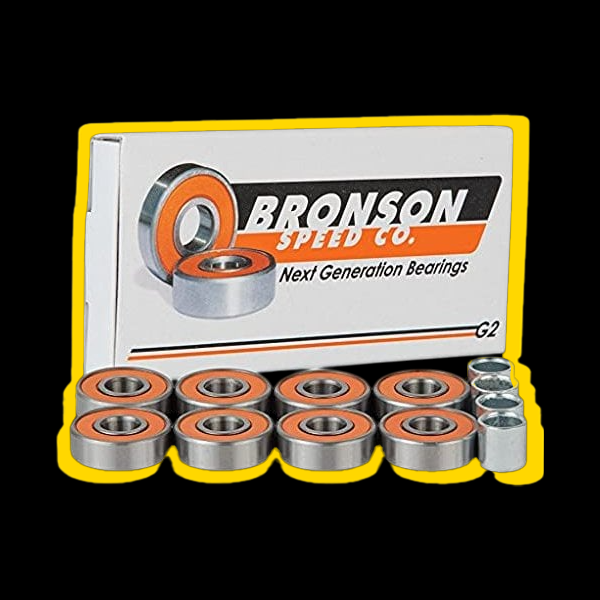
Best bearings for street: BRONSON SPEED CO. G2
MATERIAL: Metal
USOS: Street
Bronson's attention to detail in his design makes these bearings perfect for the challenges of street skateboarding.
Bronson Speed Co. G2 bearings feature very deep rails that are perfect for reducing bearing damage from side impact and therefore reducing the likelihood of bearings breaking when jumping over stairs or other street obstacles, as well as being an affordable option. They also come pre-lubricated with Bronson's High Speed Ceramic Oil to help reduce wear and increase speed.
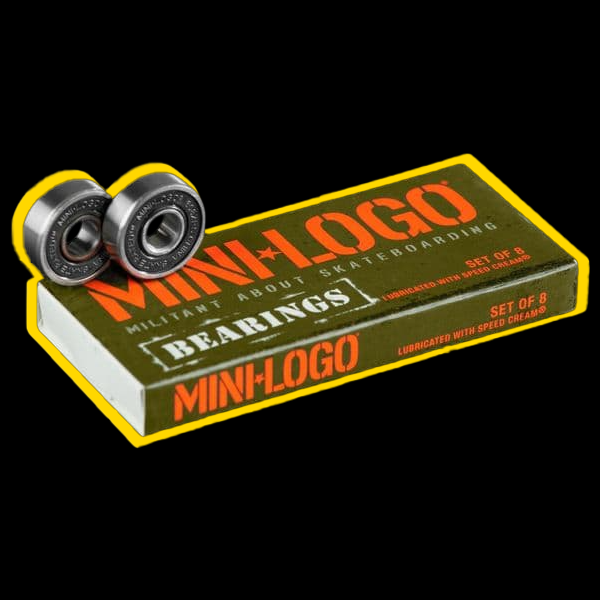
Best Bearings for Beginners: Mini-Logo Militant
MATERIAL: Metal
USOS: Street
Starting skateboarding can be a little expensive at first. Once you get a skateboard, you will probably need to buy protection and suitable footwear before you can start.
The good news is that there are some lower-cost options that still provide very good performance, without the need to spend a lot, especially if you're just starting out with Skateboarding and don't yet know if it will become your passion, or if you're going to give up on it.
Militant Mini-Logo Bearings are one of those ideal low-cost options. They come with a removable shield for easy cleaning and maintenance and are pre-lubricated with Speed Cream (synthetic oil), ready to assemble.
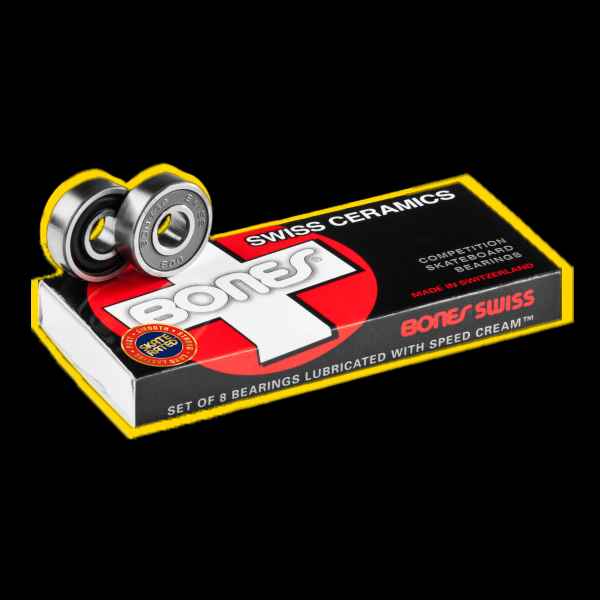
Best bearings in terms of durability: Bones Swiss Ceramics
MATERIAL: Ceramic/ Metal
FOR: Street/ Longboard
If you are looking for the highest quality and performance, these bearings are for you. The bad news is that the price is a little higher…
What justifies the price difference with Bones Swiss is that Bones Swiss Ceramic are made with ceramic balls which are much lighter, harder and stronger than steel balls, which means they will last much longer than other bearings.
These bearings will enhance any skate session, from longboards to vert, although they are not the most recommended for street use.
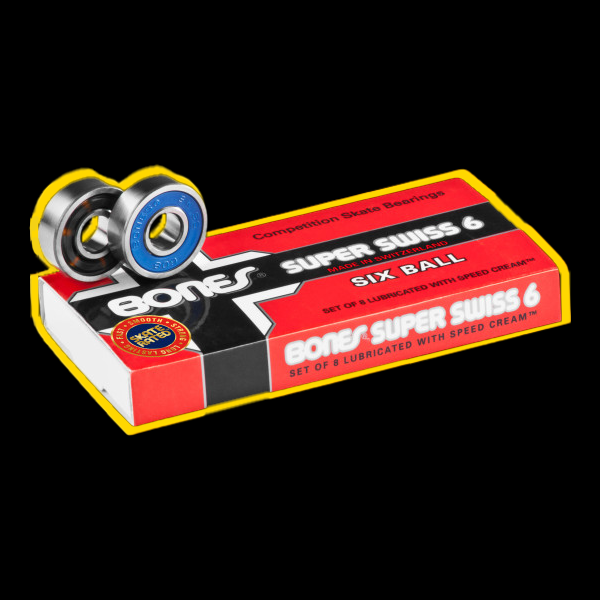
Best Bearings for Speed: Bones Super Swiss 6
MATERIAL: Metal
FOR: Street/ Longboard
Bones Super Swiss 6 skate bearings are an improved version of the classic Bones Swiss. The main difference between the two is that Super Swiss 6 bearings have six large balls instead of the classic seven.
The main advantage is that they can withstand higher speeds, have better durability and greater resistance. All of this translates into a longer lifespan, especially when cared for properly.
These bearings are ideal for all skateboarders, as well as skaters who want a fast, smooth ride that can better withstand speed.
Best Impact Bearings: Bronson Speed Co. G3
MATERIAL: Metal
FOR: Street/ Longboard
Bronson Speed Co. G3 skateboard bearings have the same great features as the G2, but with added speed and durability.
G3 bearings have a crown that holds the balls in place and at the same time keeps them evenly spaced, so the lubricating oil is constantly moving throughout the bearing. The result: the bearings run smoothly and are built to last.
Bronson Speed Co. is proud that all bearings are always hand inspected twice and solvent washed three times before being lubricated. This process ensures that when they reach your hands, Bronson Speed Co. G3 bearings have their “Factory Fresh Quality” intact and are ready to use.
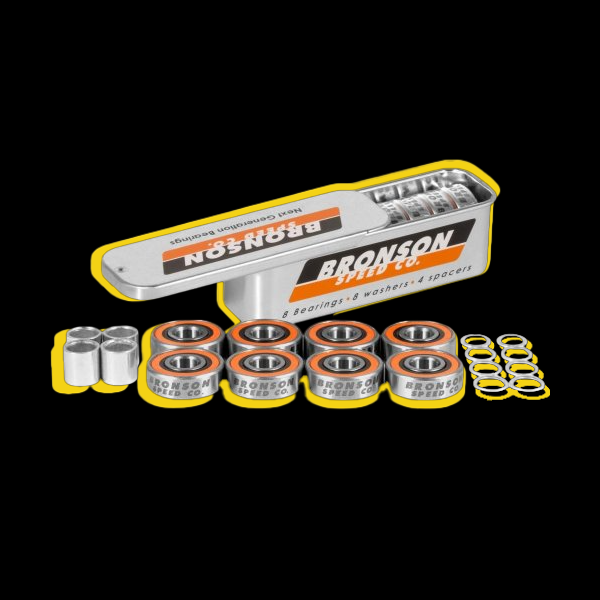
Best Bearings for Longboards: Bones Big Balls Reds
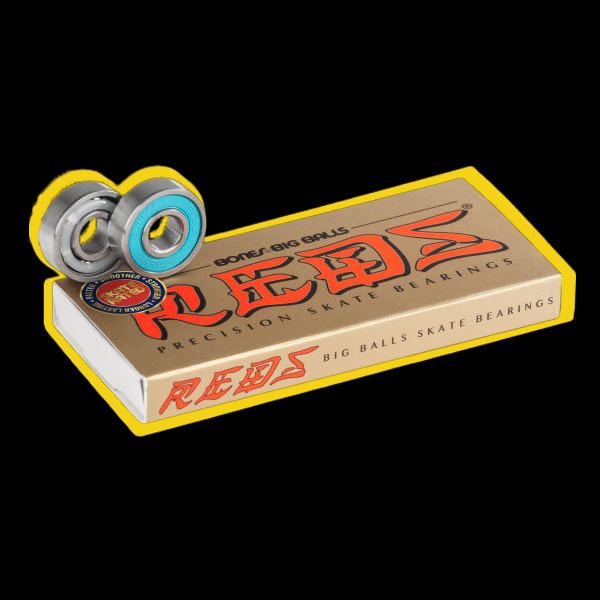
MATERIAL: Metal
USOS: Longboard
Thanks to the larger balls, the bearings rotate faster and last longer. So bigger is exactly what many longboard riders are looking for!
This makes Bones Big Balls Reds ideal for those who need high-speed endurance.
These bearings feature six balls instead of seven, but the balls themselves are 17% larger than those in other Bones bearings. This makes the bearings less susceptible to the damage that street dirt (dust or sand) can cause to skateboard bearings; and this translates into a longer useful life.
- Screws
TYPES OF SCREWS
When assembling a skateboard there are two types of screws:
Those who hold the trucks to the board, which can be phillips (star) or allen (hexagonal).
Examples
Allen: Phillips Bolts
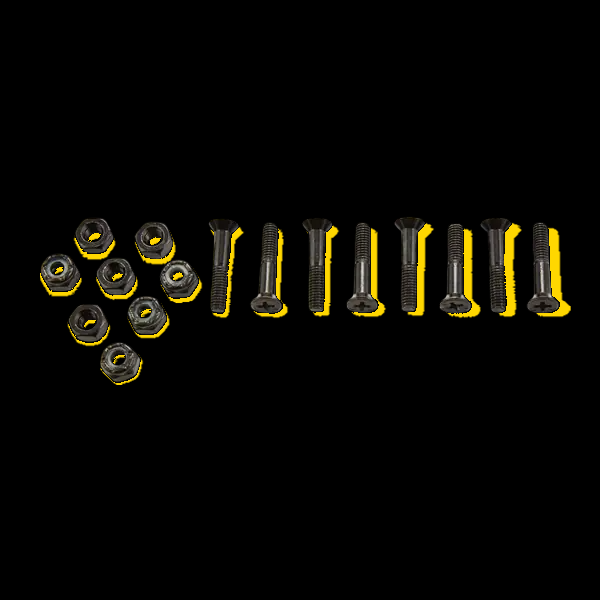
Genuine parts hardware is specified to the highest standards. Each set includes full-size nylon locknuts, full-size screw heads for Phillips screwdrivers, and flared non-threaded shafts for minimal board damage.
Tipo Allen : Allen Key Bolts
The Primitive Allen Wrench Screw Set is a must-have replacement set for the serious skater. Includes all necessary hardware for quick on-site repair.
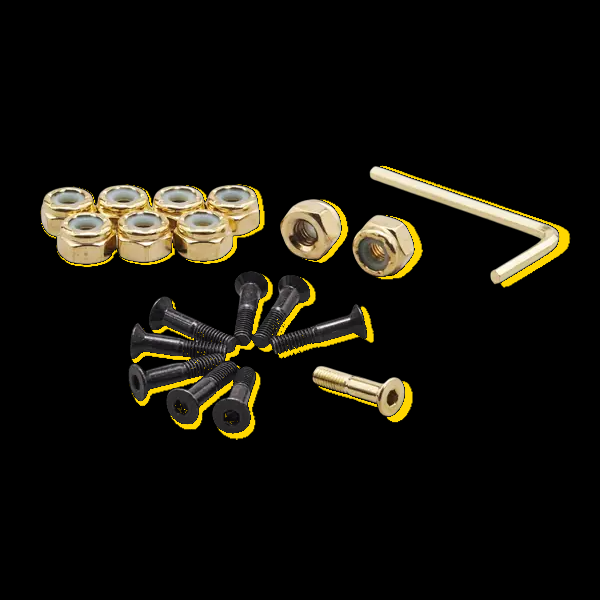
The other types of screws are Kingpins. They come in the center of the truck and all trucks have a kingpin, but use, wear and impacts damage it, and it is necessary to change the central screw to avoid having to replace the entire truck.
Kingpin: Truck Kingpin Kit
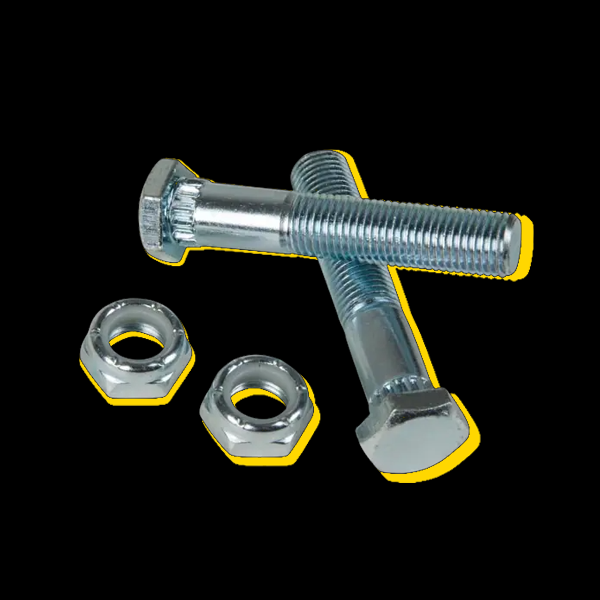
Sushi's Truck Kingpin Kit is designed to work with most modern skateboard trucks and includes 2 x 50mm screws and 2 fixing nuts.
Measurements
Street skate
- Width Typically, street skate screws range from 7/8″ (22 mm) and 1″ (25 mm).
- 7/8″ (22 mm) → This is the most common length for most street decks as they are thinner.
- 1″ (25 mm) → Some skaters prefer slightly longer screws, especially if they are using thicker decks or prefer a little more height in their setup.
Skate Longboard:
- Width For longboards, screws are usually longer due to the thicker decks. The most common sizes are 1″ (25 mm), 1 1/8″ (28 mm) and 1 1/4″ (32 mm).
- 1″ (25 mm) → Used on thinner longboards or setups with trucks that don’t require a lot of extra length.
- 1 1/8″ (28 mm) e 1 1/4″ (32 mm) → They are more common on longboards with thicker decks, as they require longer screws to ensure a secure fit.
Legal warnings


Useful links
Payment methods


